
Gulf Coast Heavy-Lift Operations
Aerial and ground documentation of large-scale modular equipment being staged and loaded onto cargo ships at a Gulf Coast industrial port.
The challenge
Heavy-lift port operations unfold across a large area and in multiple phases — staging, rigging, hoisting, and loading — and no single vantage point captures all of it. The footage needed to communicate both the physical scale of the equipment and the precision of the crew work, from the wide aerial context down to the ground-level detail of rigging and placement.
The approach
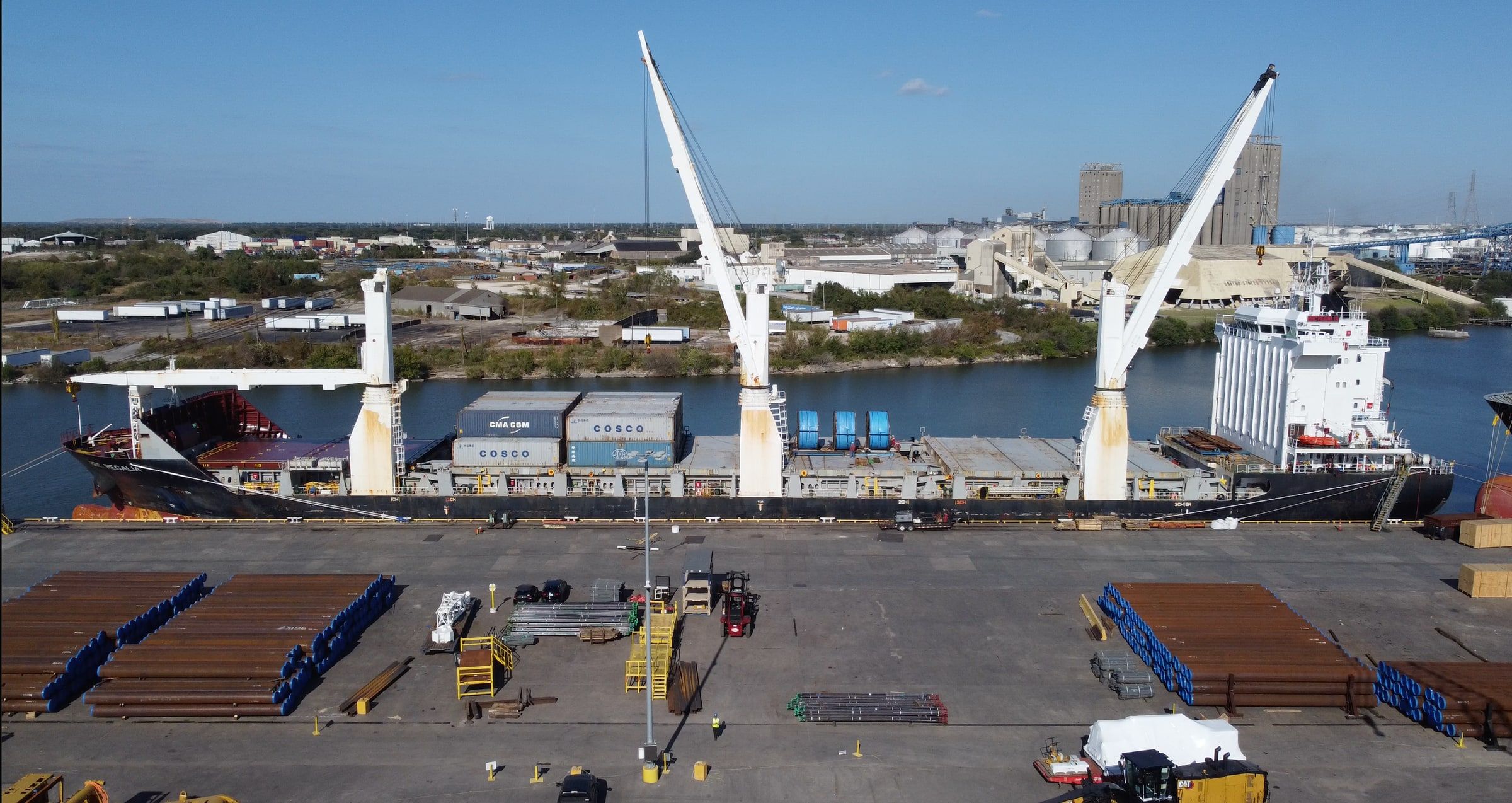
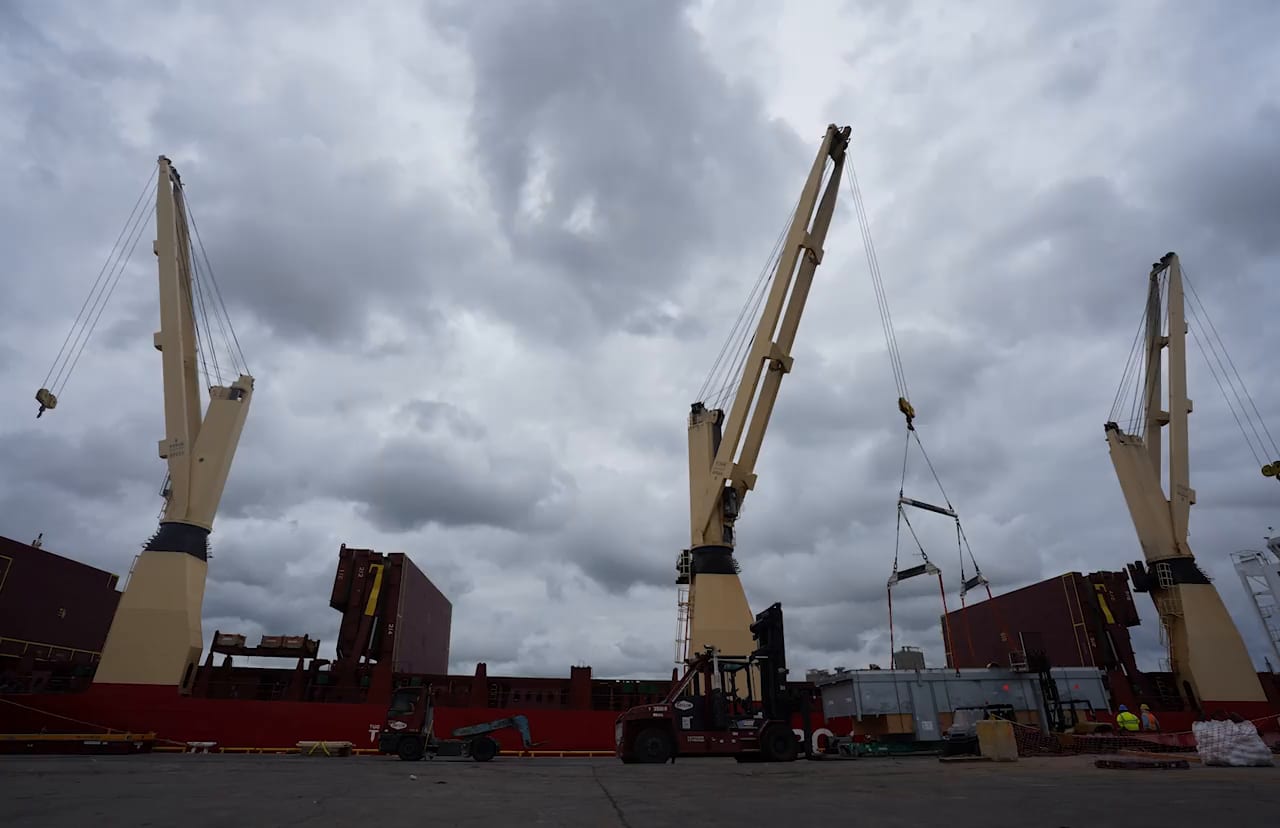
The shoot combined aerial and ground perspectives across multiple phases of the operation. Aerial frames established scale and site context — the full yard layout, equipment staging geometry, and the relationship between dock, ship, and surrounding refinery infrastructure. Ground-level coverage documented the actual lift sequences, the rigging detail, and the crew coordination that aerials alone can't convey. Timing was planned around the active lift windows to capture operations as they happened rather than staged setups.
Heavy-lift port operations cover a lot of ground — literally. Modular petrochemical equipment staged in a yard, cranes positioning loads, crews managing rigging, and cargo ships waiting at berth. No single angle tells the whole story.
The aerial perspective is what makes the scale legible. Looking straight down at a yard full of pressure vessels and pipe racks, you understand the footprint and the logistics in seconds. Oblique frames at altitude place the operation in context — the refinery infrastructure in the background, the dock layout, the proximity of equipment to berth. That context matters for project documentation, for operational reporting, and for showing the scope of the work to people who weren’t there.
Ground-level coverage does the rest. A cargo ship hold from the air is geometry; from the dockside, it’s a crew coordinating chains and signals and timing. Both views are part of the same story — the aerial sets the stage, and the ground footage shows the work happening.
The result is a visual record of the operation at every scale, from site overview to rigging detail. Useful as documentation, useful as marketing material, and built from what actually happened.
Operation timelapse
The three sequences below document the staging and loading period in the order it happened — from the yard at operational scale to the active loading runs.
The result
The project produced a complete visual record of a complex multi-phase heavy-lift operation — from staged equipment in the yard to loaded cargo on deck. The aerial perspective gave stakeholders a clear read of site scale and logistics that ground photography alone cannot deliver.
Gallery